


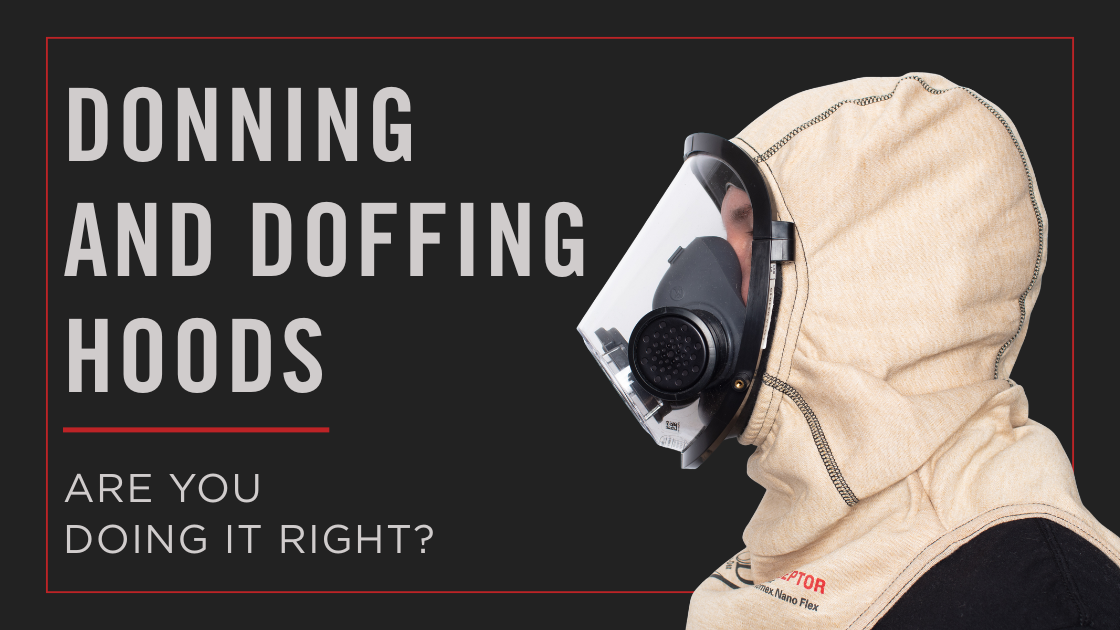
The firefighting hood has become a necessity in all head-to-toe PPE ensembles. But the question is—are you wearing it properly?
You may think that as long as you are wearing your hood, you’ll have proper protection from fireground contaminants. However, this is not the case. If your hood is not donned and doffed properly, its ability to protect you from exposure is extremely limited.
The Importance of Hoods
With updated NFPA 1970 guidelines, all structural firefighting hoods must be particulate blocking.
That means hoods now primarily serve two purposes: blocking heat and dangerous fireground contaminants. A particulate barrier adds thermal protection to your face and neck while also limiting the amount of fine particulate matter that ends up on your skin.
Those contaminants often find their way into gaps between your turnouts, but are especially dangerous in the face and neck area.
Research shows elevated temperatures can increase how likely they are to absorb contaminants. The skin of the neck is thinner than other areas of the body, which also makes it more more likely to absorb contaminants.
But like any tool on the fireground, it’s how you use it that matters. Donning and doffing are a critical part of letting your hood to its job.
How to Don Your Hood
Donning your hood is a relatively easy task.
Slip the clean hood over your head and neck, then begin donning your SCBA. After you have suited up with your SCBA facepiece and tightened the straps well, pull the hood back over your head, carefully fitting the elastic opening over the sealed edge of your SCBA facepiece.
Seat the opening over the apparatus carefully, being sure to minimize any gaps that could appear between them. Consider adding a buddy check to your routine and checking the other members of your crew to make sure their hood is donned properly.
How to Doff Your Hood
Doffing your hood properly is less straightforward than many firefighters think.
Why the Traditional Doffing Method Isn't Best
Many firefighters are accustomed to pulling their hood back down onto their neck to remove their SCBA facepiece. Only once this has been removed do they pull the hood off completely.
However, there are several issues with this method, and utilizing it regularly can lead to increased exposure to dangerous fireground contaminants. Though seemingly insignificant, this practice is by no means the most sanitary.
When the hood is pulled back down around the neck of the firefighter, the exterior layer of the hood (which caught the particulate matter) is directly next to the firefighter’s skin. This practice completely invalidates the protection that hood provided while properly donned.
The Benefits of the Overhead Doffing Method
So if the traditional method is not effective, what is?
Research shows that the overhead method, often used by Hazmat teams, is most effective in preventing exposure to toxins. In fact, the effect of properly doffing is comparable to the difference between wearing a particulate blocking hood and a standard knit hood—one study showed a 90% reduction in exposure when using the overhead method compared to the traditional method.
To complete the overhead doffing method, only a few simple changes are required.
- When it is time to doff your gear, pull the hood partly over your head, inside out, before attempting to remove your SCBA facepiece.
- Rather than pulling the hood down over your neck, pulling it forward toward your face allows the same access to your SCBA facepiece straps without exposing the skin on your neck to toxic contaminants.
- Once you loosen your SCBA facepiece, bring the entire facepiece and hood off in one motion.
This method allows for the hood to be removed in a way that keeps the contaminants away from your skin.
Using the Overhead Method
Understandably, different protocols and precautions are needed for different scenarios, and this should be kept in mind when training firefighters on how to doff their PPE. However, firefighters need to know the risks that traditional doffing poses when removing their hood. If overhead doffing is encouraged as a better alternative to traditional doffing, firefighters can actively lower their risk of exposure.
While hoods come in different shapes and sizes, proper doffing can make a world of difference when attempting to reduce exposure to fireground contaminants. In reality, your gear only works as hard as you do and knowing how to utilize it properly is your responsibility.






Leave a Reply